
Clinical evidence
Cleared, listed, and measured against clear nail growth
Onychomycosis treatments are easy to claim and hard to prove. Here is the regulatory position and the outcome data the manufacturer reports, stated plainly.
89%
of patients responded to treatment in reported trial data
6.1 mm
average new clear nail growth at six months
4 × 12 min
sessions in the standard treatment course
Before and after treatment
The measured endpoint is clear nail growth. These clinical photographs show an affected nail and the same nail after a course of treatment and regrowth. Individual results vary.
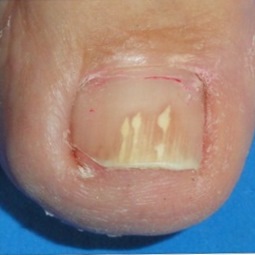 Before
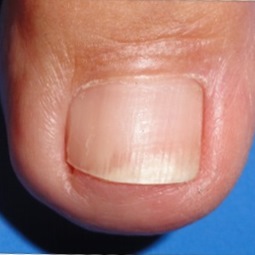 After
After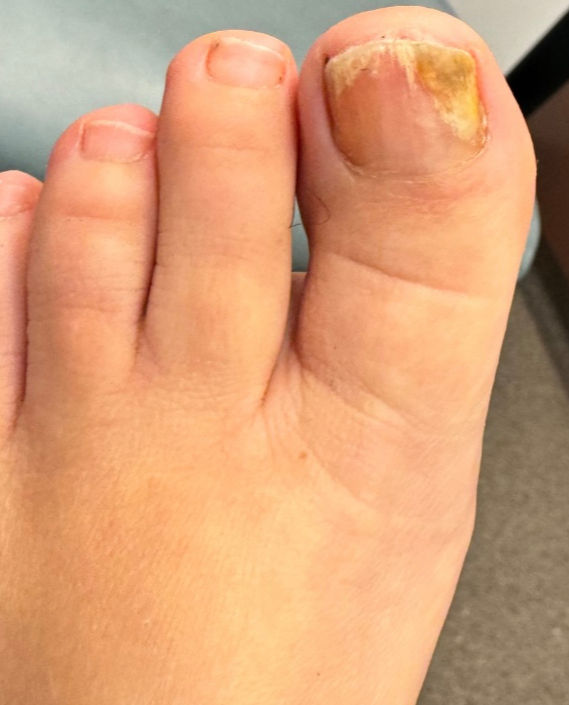 Before
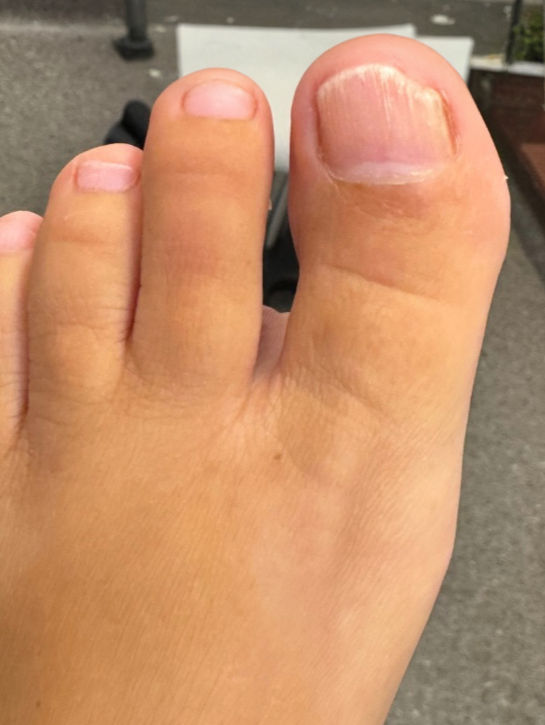 After
After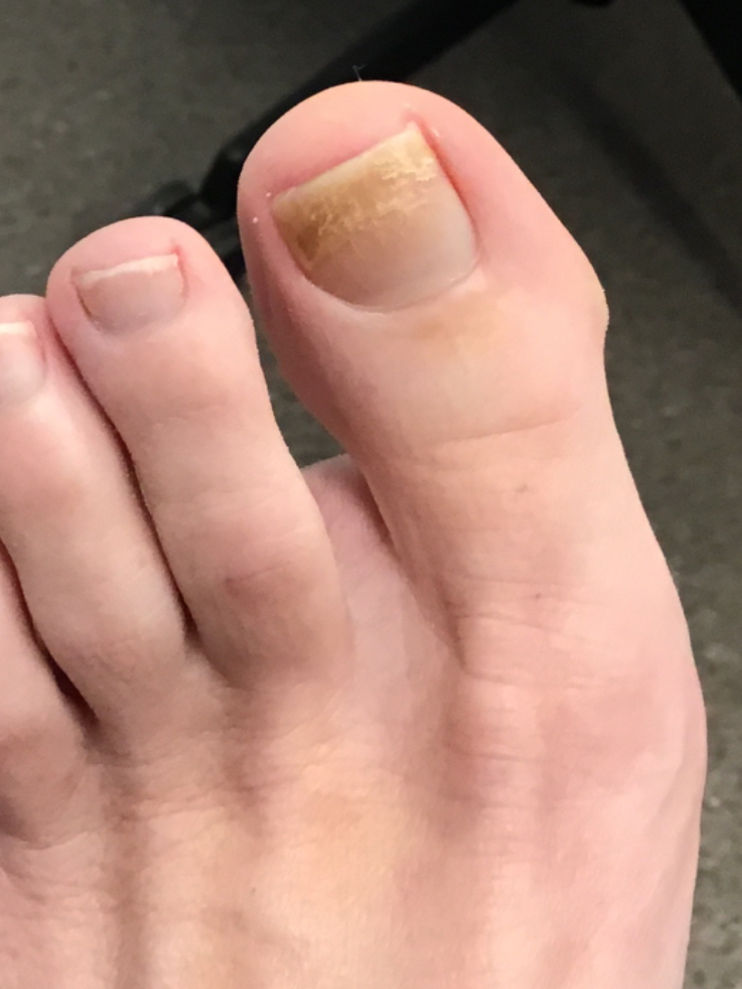 Before
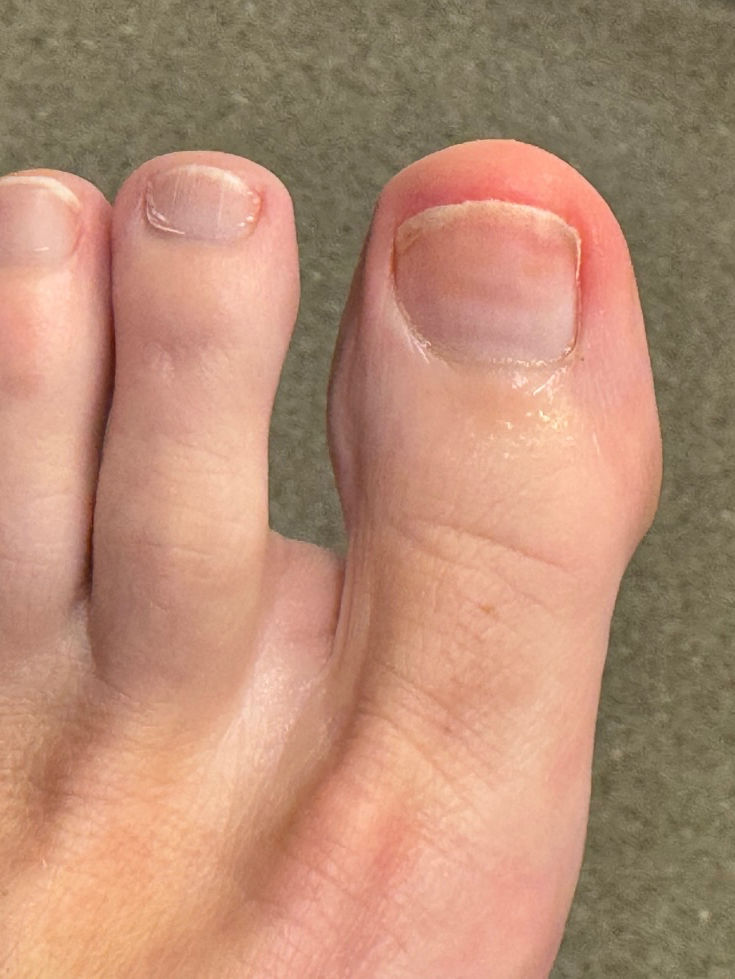 After
AfterTreatment in the clinic
A short look at a session: the foot rests on the device, nothing touches the nail, and the laser runs for 12 minutes without a clinician in the room.
Regulatory status
The Lunula Laser is the first and only non-thermal laser FDA cleared for increasing clear nail growth in patients with onychomycosis, cleared under FDA 510(k) K153164. In Australia it is entered in the Australian Register of Therapeutic Goods under ARTG 386651.
Clearance relates to clear nail growth as the measured endpoint, not to eradication of infection or to a cosmetic guarantee.
How outcomes are measured
Trials in this field assess the change in area of clear nail from baseline, usually at three and six months, because the nail plate takes months to grow out. A patient is typically counted as a responder when clear nail area increases measurably against baseline.
Response also depends on the patient: severity of infection, nail thickness, blood supply, diabetes, footwear and reinfection risk all influence the result.
The research programme behind the device
Erchonia has investigated low-level laser therapy since 1996, taking the Lunula from in-vitro work through to in-vivo clinical trials before bringing it to market. Multiple method and device patents cover the approach, including US Patent 8,409,264 for fungal infection therapy using low-level laser.
European investigation
320 patients (2,320 toes) treated at 405 nm and 635 nm for twelve minutes, weekly, across four weeks.
United States submission
54 great toenails on the same four-week protocol. This dataset supported the 510(k) clearance: 67% of treated toenails met the individual success criterion, with average clear nail growth of 5.18 mm. No adverse events were recorded across the trials.
Mechanism of action
The device works photochemically rather than thermally — light modulates cell behaviour without heating, tingling or burning. The 405 nm violet wavelength drives production of reactive oxygen species with an antimicrobial effect, while 635 nm red supports nitric oxide generation, immune activity and vascularisation. Combined, they yield peroxynitrite, which is cytotoxic to fungal pathogens.
A rotating line-generated beam spreads the dose across the whole nail unit, so the plate, the bed and the germinal matrix are all treated regardless of where the pathogen sits.
Why not oral antifungals?
The toes are the body's most distal region, and limited blood flow often means poor drug delivery, non-response or recurrence. Because fungi are eukaryotes like our own cells, systemic antifungals can also disturb human biochemical pathways; hepatotoxicity, while rare, is documented, patients need routine liver function monitoring, and some cannot be prescribed them at all.
Webinar: improving clinical outcomes in onychomycosis using the Lunula Laser, with Dr Richard Silverstein.
Published studies and trial reports
Peer-reviewed papers on non-thermal, low-level laser therapy, in date order. Each document opens in a new tab.
- View paper
2014 · PDF
Low-Level Laser Therapy for the Treatment of Chronic Plantar Fasciitis: A Prospective Study
Foot & Ankle International · Jastifer, Catena, Doty, Stevens & Coughlin
Prospective clinical study of low-level laser therapy for chronic plantar fasciitis, reporting pain and function outcomes over follow-up.
- View paper
2015 · PDF
Low-Level Laser Therapy at 635 nm for Treatment of Chronic Plantar Fasciitis: A Placebo-Controlled, Randomized Study
The Journal of Foot & Ankle Surgery · Macias, Coughlin, Zang, Stevens, Jastifer & Doty
Level 1 evidence: randomised, placebo-controlled trial of 635 nm low-level laser therapy for chronic plantar fasciitis.
- View paper
2017 · PDF
A Retrospective Study of Non-Thermal Laser Therapy for the Treatment of Toenail Onychomycosis
The Journal of Clinical and Aesthetic Dermatology · Zang et al.
Retrospective analysis of three open-label studies using the 405 nm / 635 nm dual-diode laser, with 12-minute weekly treatments over two or four weeks and clear-nail-bed measurement.
- View paper
2021 · PDF
Treatment of Toenail Onychomycosis using Laser Pharmacology
International Journal of Dermatology and Clinical Research · Zang, Sammons & Shanks
Clinical trial reporting mycological and complete cure outcomes for non-thermal laser treatment of toenail onychomycosis.
Important disclaimer
Figures above are drawn from the manufacturer's published clinical data for the Erchonia Lunula Laser. They describe averages across study populations and are not a prediction of any individual result. Nothing on this page is medical advice — treatment suitability must be assessed by a qualified practitioner. We are happy to supply the underlying study references to clinicians on request.
Request the study referencesDownloads
Printable brochures for clinicians and patients.